
One of the first questions any school or trust asks about solar is a fair one: who’s actually responsible for this once it’s up on the roof? It’s a sensible thing to want clarity on before agreeing to have a system installed on a building of which safety is of paramount importance. The short answer is that responsibility for the system sits with UrbanVolt for the full contract term – installation, ownership, and everything that comes after.
The full mechanics of how the model works, from desktop assessment through to installation and long-term performance monitoring, are covered in our guide Fully Funded Solar for Schools – How UrbanVolt’s Model Works.
Installation
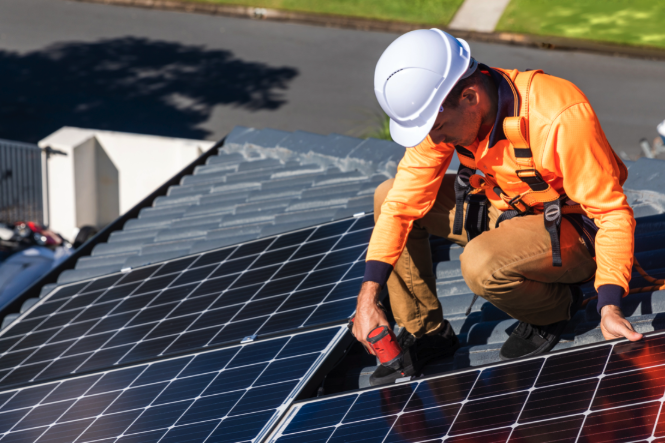
The physical installation is carried out by accredited third-party installers, vetted and managed by UrbanVolt throughout the project. That means the school isn’t sourcing or appointing a contractor itself – UrbanVolt selects installers who meet its own standards and oversees the work from start to finish, so there’s a single point of accountability rather than a school having to manage a separate installation relationship.
Installation is scheduled to minimise disruption to the school day, with holiday periods used wherever the programme allows.
Ownership
UrbanVolt owns the system for the duration of the agreement. The school never takes on the asset itself, which means it never sits on the school’s accounts as a capital item, and the school carries none of the responsibility that comes with owning solar infrastructure outright.
UrbanVolt’s solar installations are designed to have a minimum service life of 30 years, so the equipment that goes on the roof reflects that timeframe. Every installation uses Tier 1 panels — the Bloomberg classification used across the industry to identify manufacturers with a proven track record of reliability and financial stability — and the longest warranties available on the market.
Panels carry third-party certification such as ISO TUV, with sourcing audited for ethical standards throughout the supply chain. Installers and electrical engineers are selected to the same standard, and each installation follows fire safety codes including voluntary standards such as RC62.
None of this is incidental. Under UrbanVolt’s Solar PPA model, UrbanVolt only gets paid when the system generates, for as long as it keeps generating well. A school’s success with the system and UrbanVolt’s own commercial interest point in the same direction – which is why the standard is set at the top of the market rather than the minimum required to get a system installed.
Maintenance
Everything required to keep the system running – servicing, repairs, cleaning, and remote performance monitoring – is UrbanVolt’s responsibility for the full term. If a fault develops, UrbanVolt identifies and resolves it. If a panel needs replacing, that’s handled without cost or involvement from the school.
The system is monitored remotely on an ongoing basis, so issues tend to be picked up and addressed before they’d be noticed from the ground. For a school business manager or site team, that means solar doesn’t add a new maintenance responsibility to an already full workload – the system is one less thing to manage, not one more.
What this means day to day
In practice, the school’s involvement in the system once it’s live is minimal. There’s nothing to service and no maintenance schedule to stick to. The roof does its job, UrbanVolt keeps it running, and the savings come through on the electricity bill without anyone at the school needing to think about the equipment itself.
The division of responsibility is deliberate. A funded model only works if the funder carries the operational risk along with the capital cost – and that same funder has every reason to build the system properly in the first place.
Interested in getting started? Take a look at our school page and register your interest.